ranaroussi/quantstats
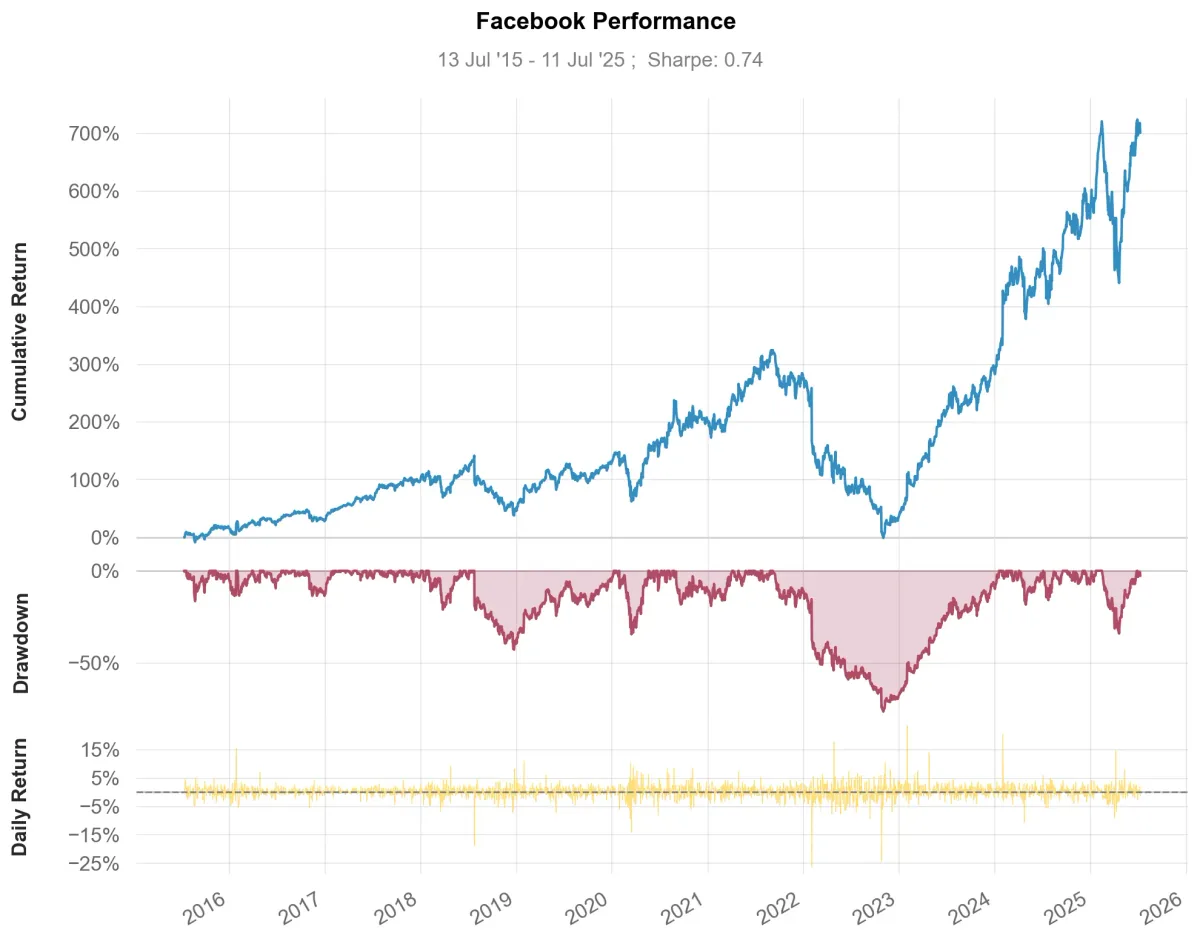
 A snapshot chart from the library: cumulative return, drawdown and daily return for one share over ten years. It is the repository's own example of what the tool prints, not a result anyone should expect. Image from the repository's README. Copyright the ranaroussi/quantstats authors. Licence: Apache-2.0. Source file on GitHub, copied and resized. How images are chosen.

In its own words: Portfolio analytics for quants, written in Python
Open ranaroussi/quantstats on GitHub
Risk warning: CFDs and spread bets are complex instruments and come with a high risk of losing money rapidly due to leverage. You can lose money on these products, and each provider publishes its own loss figure under FCA rules. You should consider whether you understand how they work and whether you can afford to take the high risk of losing your money. Automated and API trading can amplify losses through bugs, connectivity failures and runaway orders.
The facts
- Stars
- 7,678
- Forks
- 1,246
- Language
- Python
- Licence
- Apache-2.0
- Created
- Last push
- Kind
- Backtesting and research
- Read from GitHub
- github.com/ranaroussi/quantstatschecked
Stars measure attention, not quality or safety. Nothing here reviews the code or its author. Read the licence, the open issues and the code itself before you run anything against an account. Star velocity: unmeasurable, because this site holds one reading for this repository.
Get started in a couple of minutes
You need Python and Git installed. Then, in a terminal:
git clone https://github.com/ranaroussi/quantstats.git
cd quantstats
- python -m venv .venv
- Activate it: .venv\Scripts\activate on Windows, source .venv/bin/activate on macOS or Linux
- Install what the project needs. Most Python projects use: pip install -r requirements.txt or pip install -e .
These are the usual steps for a project in this language, not instructions taken from this repository. Its README has the exact commands, and it wins wherever the two differ.
Before you connect anything to a broker: read what the code does, use a demo account, and keep keys in environment variables, never in the code. New to GitHub? Start with the basics.